January 19, 2007



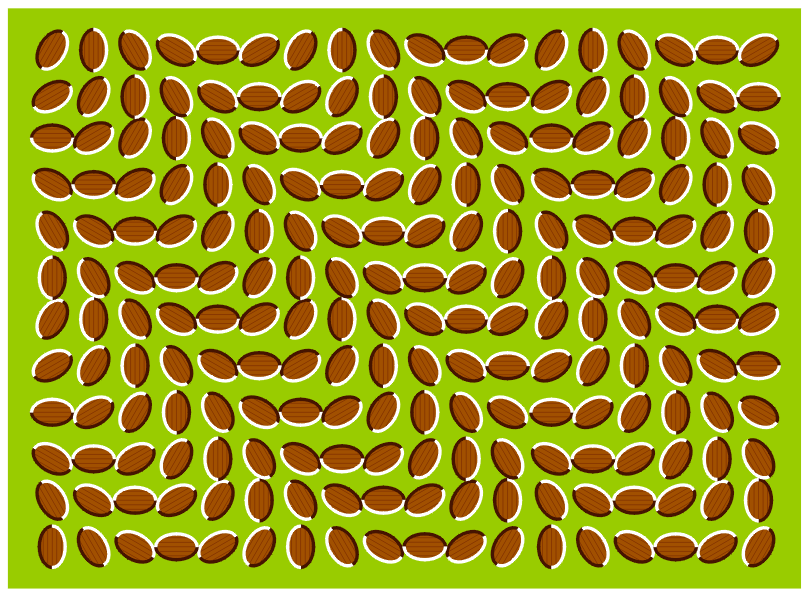
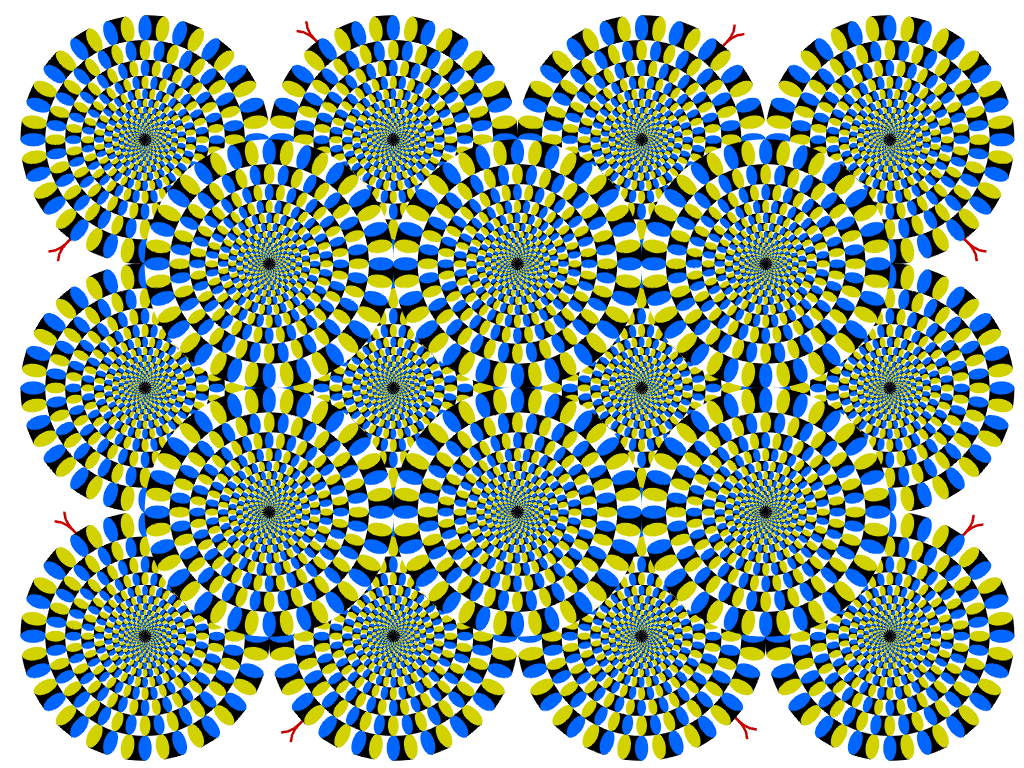
"...a possible explanation would be that motion detectors—at some unspecified location in the brain—that span the contrast jumps between white/light-gray or black/dark-gray are activated on the higher-contrast side of each pair before being activated on the lower-contrast side, and thus respond as if there were real motion in the image."
From: Bevil R. Conway, Akiyoshi Kitaoka, Arash Yazdanbakhsh,3 Christopher C. Pack,4 and Margaret S. Livingstone (2005). Neural basis for a powerful static motion illusion. J Neurosci. 2005 June 8; 25(23): 5651–5656.